
Running around the apartment, jumping off the couch, unable to sit at the table for even a minute, interrupting conversations, grabbing other children’s toys, and then already rushing somewhere else. Exhausting? Absolutely. Concerning? It depends.
Today, many parents visit pediatricians with the same question: “Does my child have ADHD?” And the answer, more often than you might think, is: “No — your child is behaving like a child.” But there are also situations where the line is not so clear. This text is here to help you recognize the difference.
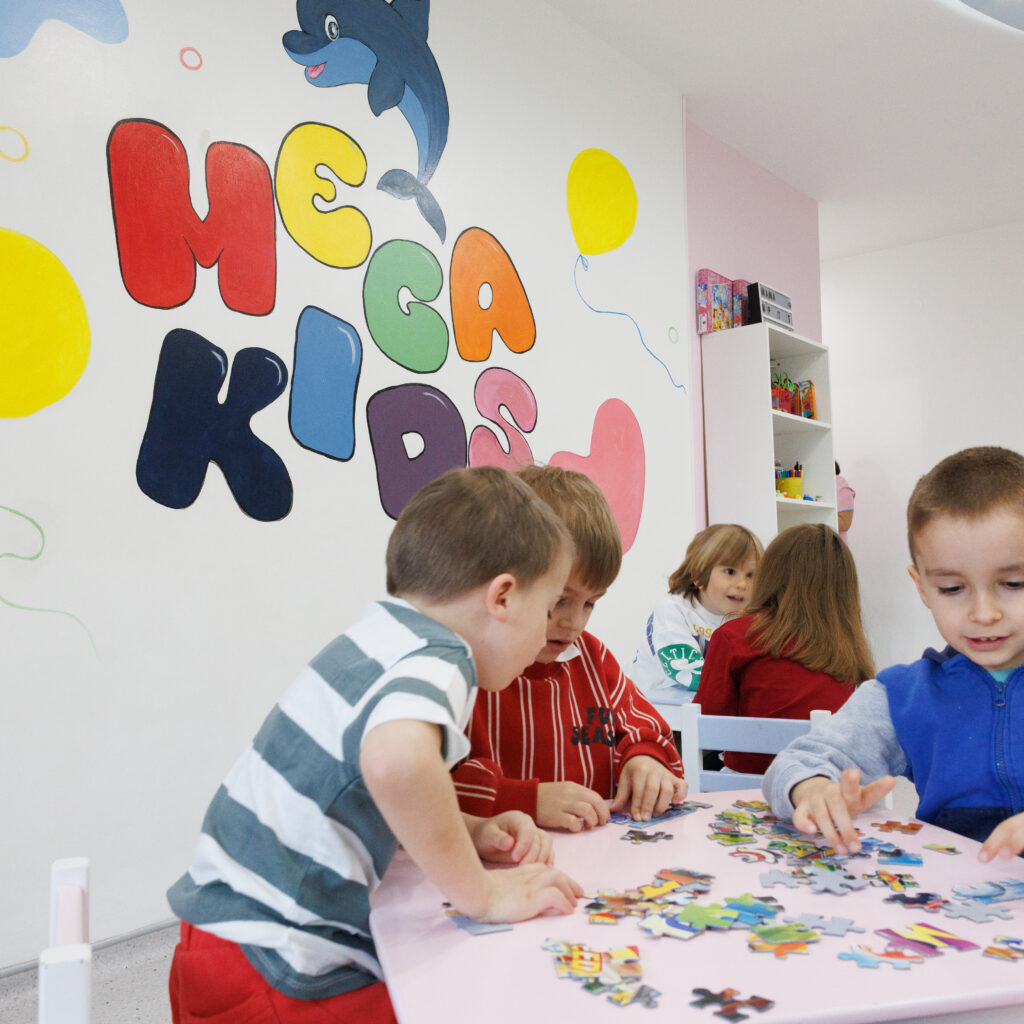
What Is Actually Normal for Preschool Age?
First, one important fact: the brain of a child between the ages of 2 and 5 is biologically not capable of staying calm and still for long periods of time. The prefrontal cortex — the part of the brain responsible for self-control, patience, and impulse regulation — continues developing until around the age of 25.
So when you say, “My child can’t control themselves,” you are largely right. And that is normal.
For preschool-aged children, it is completely normal to:
- Switch activities every 5–10 minutes
- Run instead of walk (almost all the time)
- Have difficulty waiting their turn or being patient
- Be loud, impulsive, and emotional
- Struggle to calm down when excited or overtired
- Have “days when everything feels too much”
If this sounds like your child — welcome to the preschool years.
When Does Restlessness Cross the Line?
What separates natural liveliness from ADHD (Attention Deficit Hyperactivity Disorder) is not only the intensity, but the pattern of behavior that repeats across different environments and significantly interferes with daily functioning.
Signs That Deserve Professional Evaluation
Attention and Concentration
- The child cannot finish even short activities they normally enjoy (puzzles, drawing, games)
- Constantly jumps from one activity to another without completing anything
- Seems “absent” even when you are speaking directly to them
Impulsivity
- Reacts before you finish your sentence — constantly, not occasionally
- Shows no hesitation in dangerous situations (running into the street, jumping from heights without assessing danger)
- Physically pushes or hits other children without provocation and does not learn from consequences
Hyperactivity
- Cannot stay still even in situations where it is reasonably expected for their age (short mealtime, bedtime story)
- Is constantly in motion even when sick or tired
- The same behavior pattern appears at home, in kindergarten, at grandparents’ house — everywhere
The key difference: an energetic child can calm down when something is truly interesting to them. A child with ADHD often struggles with attention even during activities they enjoy.
ADHD Is Not Diagnosed Before Age 6 — and There’s a Reason for That
It is important to know that official ADHD diagnoses are generally not made before the age of 6. The reason is simple — symptoms of ADHD and normal preschool behavior can look very similar at that age.
What can be helpful before age six is a developmental evaluation. A child psychologist or neuropsychiatrist can assess whether there are reasons for concern and recommend support, without labeling the child.
What Increases Restlessness in Children?
Even when ADHD is not involved, certain factors can make almost any child more restless:
Too Little Physical Activity
Preschool children need around 3 or more hours of movement daily. If they do not get enough physical activity, that energy has to go somewhere — usually inside the house.
Too Much Screen Time
Fast-paced screen content literally trains the brain to struggle with slower, real-life activities. A child who spends hours watching short-form YouTube videos will naturally have more difficulty sitting and listening to a story.
Lack of Structure
Children function better when they know what comes next. A chaotic schedule without routines increases anxiety — and in young children, anxiety often appears as hyperactivity.
Lack of Sleep
Counterintuitive but true: tired children are often more restless, not calmer. Sleep deprivation directly affects self-control.
Family Stress
Children are highly sensitive to tension in their environment. Arguments, moving homes, divorce, or the arrival of a new sibling can temporarily increase restlessness.
What Actually Helps a Restless Child?
Regardless of the cause, these strategies help most children:
Give Them Plenty of Movement Before Calm Activities
An hour of outdoor play before lunch or bedtime can work wonders. Use their energy instead of fighting against it.
Create Predictable Routines
Morning routines, bedtime routines, consistent order of activities — children who know what comes next spend less energy on anxiety.
Offer Short Activities With a Clear Beginning and End
Instead of saying, “Go play,” try: “Now we’ll finish this puzzle, and then we’ll go outside.” Specific and time-limited activities work better.
Reduce Visual and Auditory Chaos
A TV running in the background, toys scattered everywhere, loud music — all of it increases stimulation. Calm environment = calmer child.
Praise Calm Behavior, Not Only Active Behavior
“I like how you’re sitting and listening right now.” Children repeat behaviors that receive positive attention.
Be Realistic About Expectations
A three-year-old sitting calmly for five minutes is a success. Do not compare them to older children or to adult expectations.
When Should You Seek Professional Help?
If after reading this you still feel something goes beyond normal liveliness, do not hesitate to seek advice. A pediatrician may refer you to:
- A pediatric neurologist or neuropsychiatrist — for neurological assessment
- A child psychologist — for behavioral evaluation and parenting support
- A special educator — if there are additional learning or speech difficulties
Early evaluation is not a stigma. It is a tool that helps you support your child in the right way before difficulties become bigger.
Structure as the Secret to Calmness
One thing many parents notice after their child starts kindergarten is this: children who “cannot sit still” at home often function very well in kindergarten.
Why? Because kindergarten provides exactly what restless children need most: structure, predictability, clear rules, physical activity, and interaction with peers. Group dynamics and clearly organized parts of the day help children understand where they are and what is expected of them.
That does not mean the problem is “at home.” It means the environment has an enormous influence on children’s behavior. Sometimes, the right environment can support a child better than even the most devoted parent alone.
If you would like to learn more about how we structure activities for children with different temperaments in our kindergarten, feel free to contact us — we are always happy to talk with parents.