
A sense of belonging is one of the foundations of a child’s emotional and social development. When a child feels accepted, seen, and valued within a group, they are more likely to engage in activities, build relationships, and develop self-confidence. Preschool is often the first environment outside the family where a child learns what it means to be part of a community.
What Does It Mean to Belong to a Group?
For a child, belonging to a group means:
-
being accepted just as they are,
-
having their own place in shared activities,
-
feeling safe among peers,
-
knowing that their needs and feelings matter.
This sense of belonging does not appear instantly — it develops gradually through everyday interactions and experiences.
How Does a Sense of Belonging Develop in Preschool?
1. Through routines and predictability
Daily activities such as morning circle time, shared meals, or playtime help children feel secure. When they know what comes next, they more easily experience the group as a stable and safe place.
2. Through relationships with educators
Educators play a key role in creating a sense of belonging. When a child feels accepted, listened to, and respected, they are more likely to open up to their peers as well.
3. Through play with other children
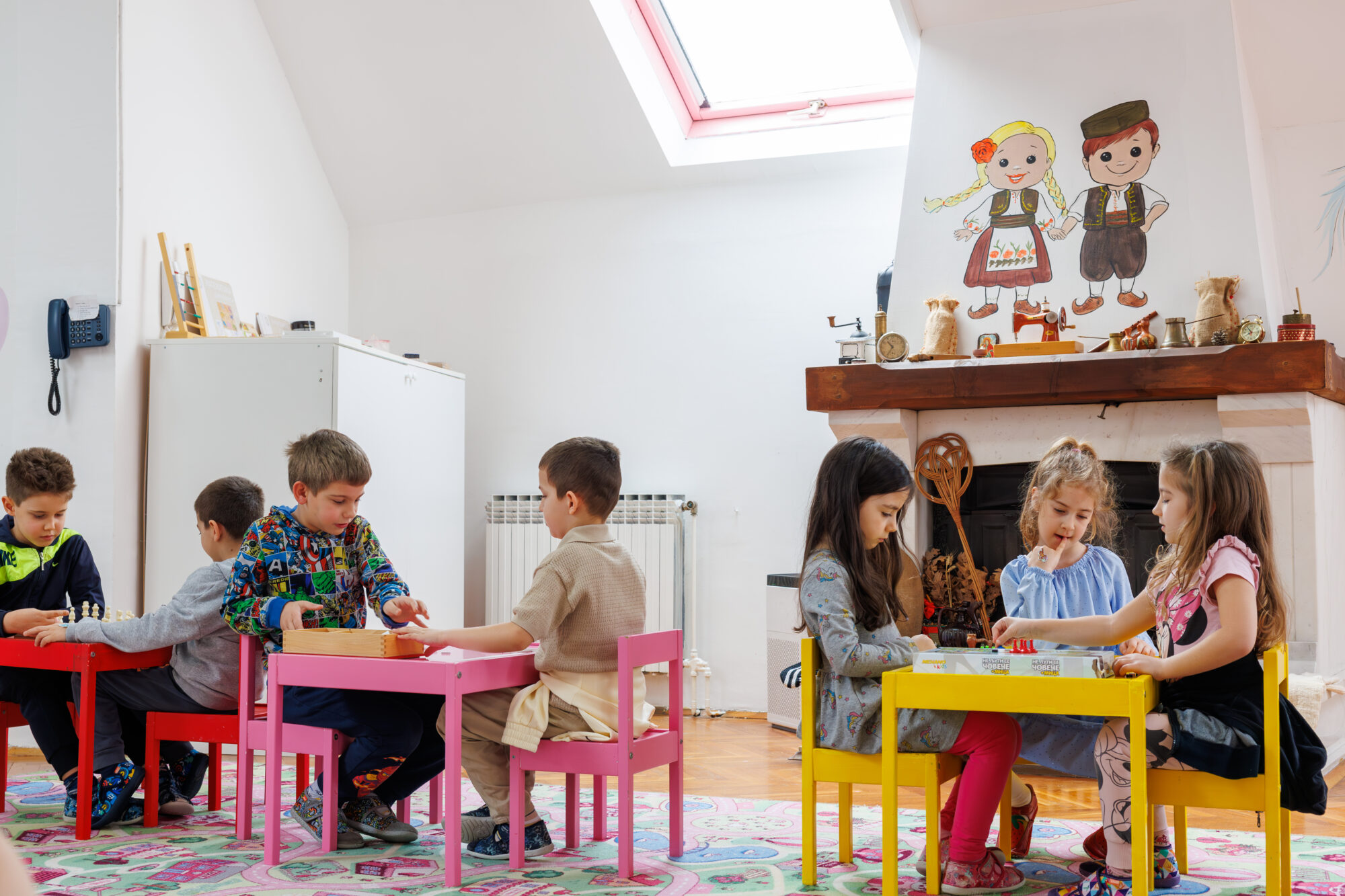
Shared play is the strongest bridge to belonging. Through play, children learn to share, cooperate, take turns, and solve problems together.
4. Through participation in group activities
Songs, group discussions, shared projects, and small roles within the group help children feel that they contribute and that they are important.
5. Through acceptance of diversity
When a group values different interests, temperaments, and abilities, every child is given space to feel accepted.
How Can Parents Support a Sense of Belonging?
-
Talk with your child about preschool and their friends.
-
Encourage a positive attitude toward the group and educators.
-
Respect the child’s pace of adjustment.
-
Cooperate with educators and share important information about your child.
When parents and preschool work as a team, the child receives a clear message of safety and support.
Conclusion
A sense of belonging to a group does not develop overnight. It is built through routine, relationships, play, and shared experiences. When a child feels that they belong, preschool becomes a place where they grow, learn, and develop with joy.
Belonging is not just a social skill — it is the foundation of emotional security that gives a child the confidence to explore the world around them.