
Many children learn new words and concepts best not by sitting at a table with letters in front of them, but through active play. Play is a natural way of learning because it engages the senses, emotions, and movement — all of which help the brain retain and connect new information.
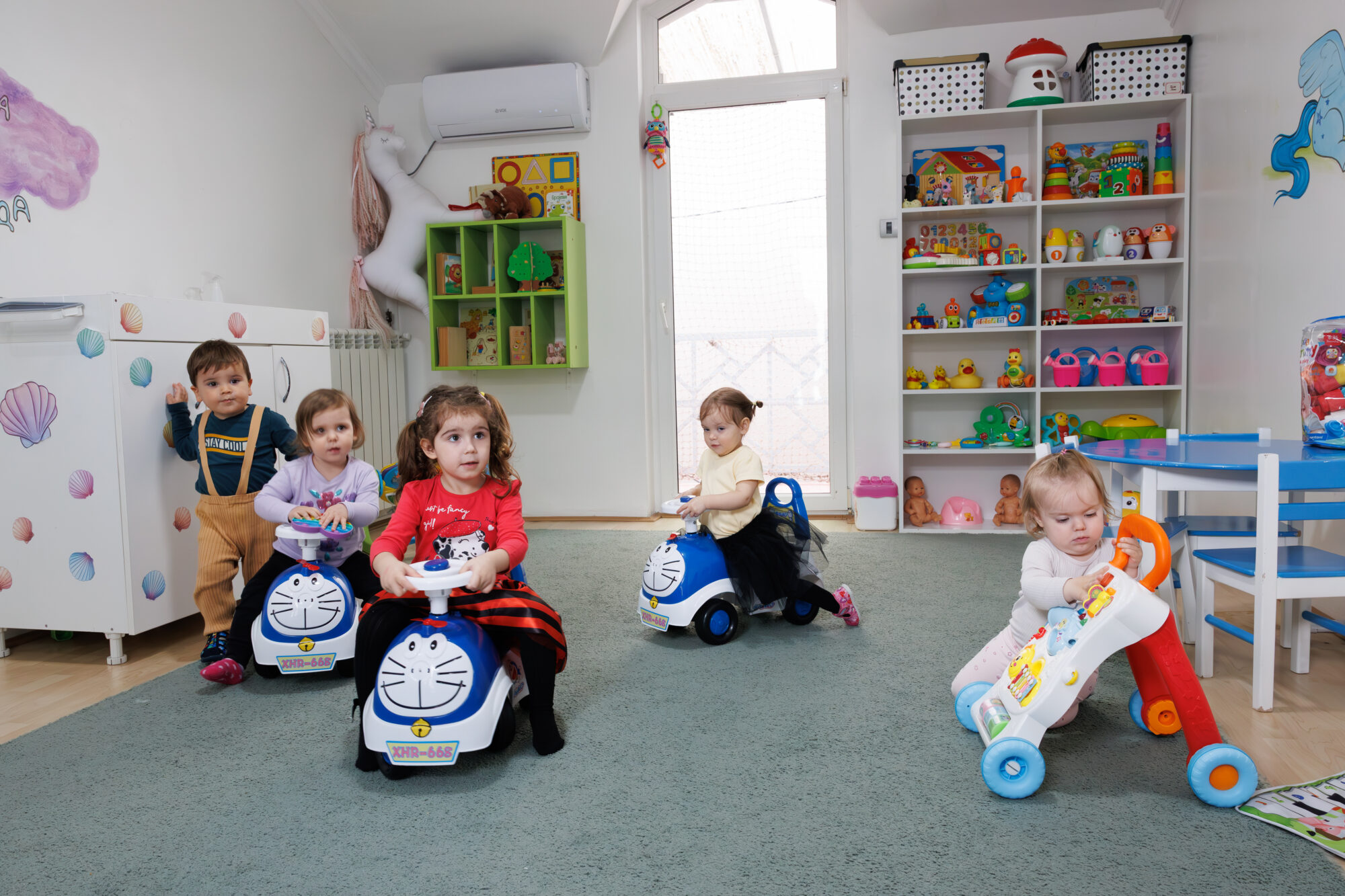
Why Play Supports Language Development
While sitting and repeating words can be useful at certain moments, research shows that children learn best when they:
- experience the meaning of words directly,
- use their body, hands, and eyes during learning,
- engage emotions and enjoyment in the process,
- learn through interaction with others.
In play, a new word gains context: the child sees, touches, or points to the object being named, hears the sound, and uses the word in a real situation. In this way, the brain builds strong connections between the word and its meaning.
How to Encourage Word Learning Through Play
1. Role play and dramatic play
Children love to play “grown-up” roles: cooking, going shopping, caring for dolls. In these games, they naturally use words that describe actions and objects, often repeating them, which strengthens language acquisition.
2. Playing with objects
Blocks, toy cars, animals, playdough — all of these are excellent for learning the names of objects, colors, and numbers. For example, while building a “house with blocks,” a child learns words like house, door, and roof and uses them in context.
3. Movement and songs
Songs with movements, rhythm, and repeated words strengthen memory and connect sound with action.
For example, jumping to a song with words like “jump, jump” helps the child link the word jump to a specific movement.
4. Interactive games with peers
Group games require communication: asking questions, answering, taking turns. Children learn new words from each other and reinforce them through use in conversation.
5. Showing and storytelling
When a parent or educator tells a story while pointing to pictures or objects, the child visually and sensory connects new words. For example, the word duck becomes a living concept when the child sees a toy duck or a real duck during play.
Conclusion
Learning new words is not just about sitting at a table and repeating them. Children achieve the best results through activity, play, and everyday interaction. Play allows words to be experienced, heard, used, and connected to real actions and objects — making language learning natural, enjoyable, and effective.
Through play, new words are not just memorized — they become part of the child’s world and the way they understand and describe what surrounds them.