
Encouraging your child to share toys is an important step in their social development. For many parents, this can be a challenge: the child often doesn’t want to give up their favorite toy, cries or gets angry when someone else takes it. However, sharing is not just about toys – it’s part of learning about cooperation, empathy and building friendships.
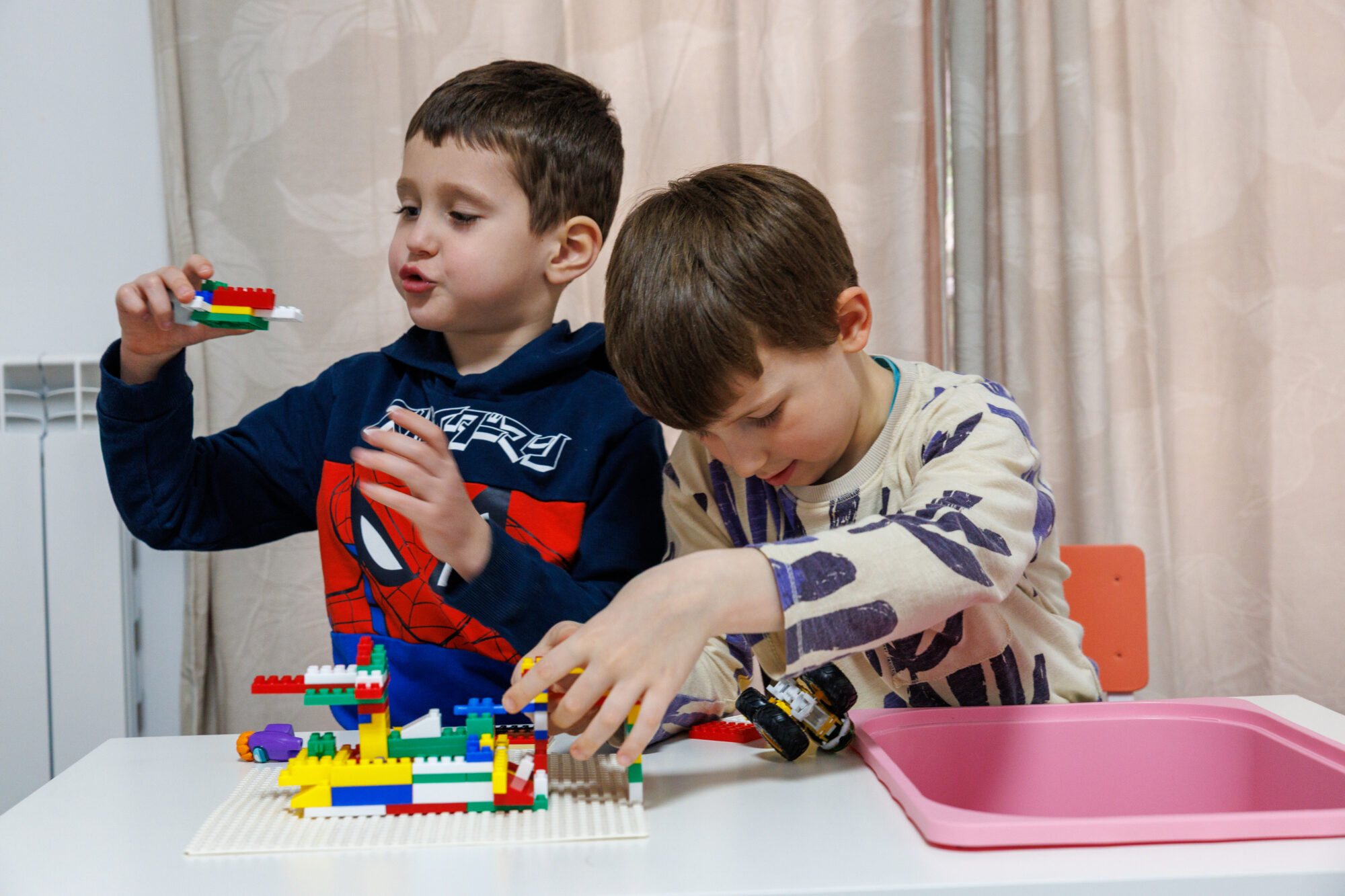
Why is sharing sometimes not easy?
Young children are naturally very attached to their belongings. A toy is not just an object for them, but something closely tied to a sense of security and belonging. When someone else takes their toy, the child may experience it as a personal loss. Only gradually, through experience and with adult guidance, do they learn to share and discover that sharing can bring joy.
How to approach a child?
For a child to learn how to share, the process should be gradual and gentle. Forcing rarely gives good results, as it may create resistance or even greater fear of loss. Here are some tips:
- Start at homeParents can be the first example. If a child sees that mom and dad share food, time, or objects with each other, it will be easier for them to understand that sharing is natural and positive.
- Differentiate “special” toysEvery child has one or two toys to which they are especially attached. It’s a good idea to agree that these toys don’t have to be shared. This way, the child feels they have control and are not at risk of “losing” what matters most. Other toys can be part of shared play.
- Learn through playInstead of just saying “share,” join in the play and show how sharing can look. For example: “How about you lend me the car, and I’ll give you the ball. Then we can race together.” This way, the child sees that sharing leads to more fun play.
- Praise the effort, not just the resultWhen a child shares a toy, it’s important to acknowledge it: “It’s so nice that you gave your friend a block—now you both enjoyed playing.” This builds pride and connects sharing with positive emotions.
- Teach patienceSharing is not only about giving a toy, but also about waiting one’s turn. It helps to introduce rules like: “You drive the car for two laps, then Marko drives for two laps.” Clear rules help children understand that their turn will come and that nothing is lost forever.
The role of preschool and peers
In preschool, children have many opportunities to practice sharing. Teachers use group activities and shared games to help children see that play is better when everyone participates. Peers also have a big influence—when a child sees others sharing, they often want to do the same.
What if the child still refuses?
Patience is key. Some children take longer to accept sharing, but that doesn’t mean they won’t develop the skill. If a child strongly resists, try to understand what’s behind it—is it insecurity, strong attachment to a toy, or simply being used to having everything to themselves? Conversation, understanding, and gradually introducing rules usually bring the best results.
Teaching a child to share toys without feeling a sense of loss means teaching them to share joy, not just objects. Through play, conversation, and the good example of parents and teachers, children gradually realize that sharing is not a loss but a gain—because it brings new friends, more fun, and better memories.